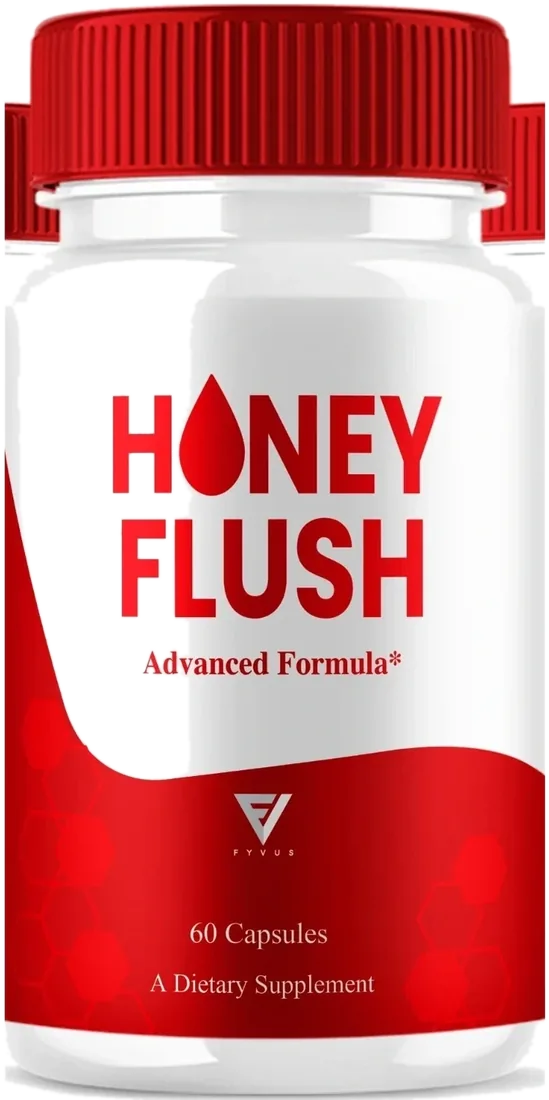
Label numbers explained
What 10,000% Daily Value Means: B12 and the Other HoneyFlush Nutrients
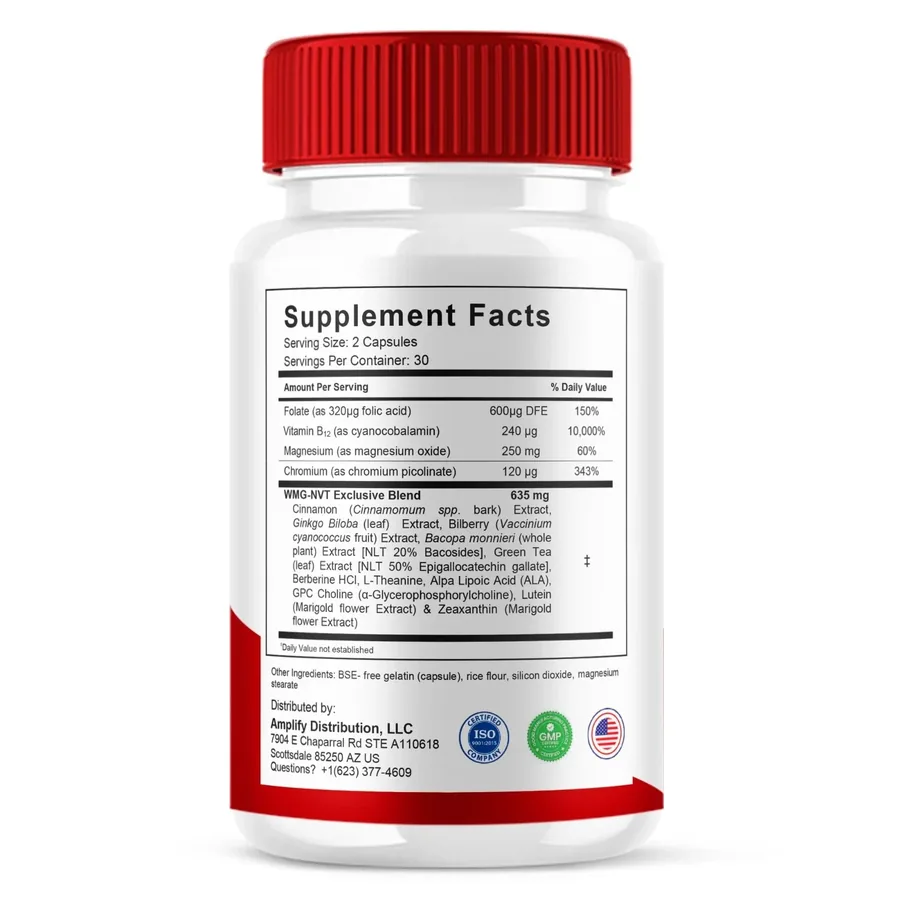
10,000% Daily Value means HoneyFlush gives 240 µg of vitamin B12, 100 times the 2.4 µg Daily Value. No upper limit is set for B12, and the body absorbs only a small share of large doses. The number to watch is magnesium: 250 mg against a 350 mg supplemental upper limit.
What does 10,000% Daily Value actually mean?
It means one serving holds 100 times the Daily Value for that nutrient. For HoneyFlush, 2 capsules give 240 µg of vitamin B12, and the Daily Value for B12 is 2.4 µg.
The percentage looks alarming, but it is simple division: 240 divided by 2.4 equals 100, or 10,000%. A large %DV is common for B12 in supplements. Whether it matters depends on how much your body takes in and whether an upper limit exists.
How do Daily Values and upper limits differ?
A Daily Value is a reference point for labels. An upper limit is a safety ceiling. They answer different questions, and a high %DV does not mean you passed a limit.
Daily Value (DV)
A single reference amount used on US labels so you can compare products. It is not a personal target.
% Daily Value
The label amount divided by the Daily Value. 100% equals one full reference amount.
Upper limit (UL)
The most a typical adult can take each day with little risk of harm. Not every nutrient has one.
Think of it this way. The Daily Value tells you how the label amount compares with a typical need. The upper limit tells you when the amount starts to carry a risk. HoneyFlush's two largest percentages, B12 and chromium, belong to nutrients with no upper limit set.
Why is there no upper limit for vitamin B12?
No upper limit is set because no harm has been linked to high B12 intake from food or supplements in healthy people. The body also absorbs only a small share of a large oral dose (NIH ODS).
B12 is used to make red blood cells and keep nerves working. At normal food amounts, the body absorbs B12 through a carrier in the gut. That carrier can handle only a little at a time. With a big dose like 240 µg, most of it passes through without being taken up. A small extra share is absorbed passively.
So is 240 µg wasted?
Much of it is not absorbed, which is why supplement makers often use large doses. The printed number is what goes in, not what your body keeps. That is also why 10,000% is less dramatic than it sounds.
The form: cyanocobalamin
HoneyFlush uses cyanocobalamin, the most common form in supplements. It is stable and well studied. The body converts it to the forms it uses.
Where else B12 comes from
B12 is found naturally in meat, fish, eggs and milk, and it is added to some breakfast cereals. People who eat no animal foods often rely on fortified foods or a supplement for it. If your diet already includes these foods most days, the B12 in HoneyFlush adds to an intake that may already meet the Daily Value.
How do the other three HoneyFlush nutrients compare?
Folate and magnesium have upper limits, so their totals matter more than B12. Chromium has a high %DV like B12, but no limit is set.
| Nutrient (form) | HoneyFlush per 2 capsules | Daily Value | % DV on label | Adult upper limit |
|---|---|---|---|---|
| Vitamin B12 (cyanocobalamin) | 240 µg | 2.4 µg | 10,000% | None set |
| Chromium (chromium picolinate) | 120 µg | 35 µg | 343% | None set |
| Folate (320 µg folic acid) | 600 µg DFE | 400 µg DFE | 150% | 1,000 µg folic acid |
| Magnesium (magnesium oxide) | 250 mg | 420 mg | 60% | 350 mg from supplements |
Chromium at 343%
Chromium 120 µg is 343% of the 35 µg Daily Value. No upper limit is set for chromium, and study results on blood sugar are mixed (NIH ODS). That research does not support any claim for healthy adults.
Folate at 150%
Folate 600 µg DFE is 150% of the Daily Value. It comes from 320 µg of folic acid, which the label converts to dietary folate equivalents. The adult upper limit is 1,000 µg of folic acid from supplements and fortified foods (NIH ODS). HoneyFlush uses about a third of that.
Magnesium at 60%
Magnesium 250 mg is 60% of the Daily Value. Here the %DV is low but the upper limit is close. The limit for supplemental magnesium is 350 mg a day, so HoneyFlush leaves only 100 mg of room (NIH ODS). Magnesium oxide is also a form known to loosen stools.
Which HoneyFlush number deserves the most attention?
Magnesium, not B12. Its %DV is the smallest of the four, but it sits closest to an upper limit, and other products often add more.
The lesson applies to any label. A big percentage grabs the eye, but the useful check is the amount compared with the upper limit, counted across everything you take. Here is a quick order of checks.
Look for nutrients with an upper limit
On HoneyFlush, that is folic acid and magnesium.
Add your other products
Include a multivitamin, a sleep or calm product, and fortified drinks or cereals.
Compare the total with the limit
Stay under 1,000 µg of folic acid and 350 mg of supplemental magnesium.
Then look at the big percentages
B12 and chromium have no limit set, so a high %DV there is less of a concern.
If you also take medicine, magnesium may interact with some antibiotics and bone medicines, so ask a pharmacist about spacing doses. The side effects page lists that and the blend interactions.
What about the blend? Does it have a % Daily Value?
No. The ten blend ingredients show a ‡ symbol, which means no Daily Value has been set. That is normal for plant extracts and compounds such as L-theanine.
So the blend gives no percentages and no single amounts, just a 635 mg total. For how to read that part of the label, see nutrient amounts vs. proprietary blends. For what each of the ten was studied for, see what the research tested for the ten blend ingredients.
Want every line explained in one place? The Supplement Facts page covers the full panel. The how to use page covers the daily 2-capsule routine.
B12 and % Daily Value: common questions
Is 10,000% of the Daily Value of B12 dangerous?
No upper limit is set for B12, because harm has not been linked to high intakes in healthy people. The body absorbs only a small share of a large dose.
What is the Daily Value for B12?
2.4 µg. HoneyFlush gives 240 µg per 2 capsules, which is 100 times that amount.
Why does chromium show 343%?
HoneyFlush gives 120 µg of chromium, and the Daily Value is 35 µg. No upper limit is set for chromium.
Which HoneyFlush nutrient is closest to a limit?
Magnesium. 250 mg uses most of the 350 mg upper limit for supplemental magnesium, so check other products that contain it.
Why does the blend have no % Daily Value?
No Daily Value has been set for its ten ingredients, so the label shows a ‡ symbol instead.
Sources for this page
- NIH Office of Dietary Supplements. Vitamin B12: Fact Sheet for Health Professionals. Source
- NIH Office of Dietary Supplements. Chromium: Fact Sheet for Health Professionals. Source
- NIH Office of Dietary Supplements. Folate: Fact Sheet for Health Professionals. Source
- NIH Office of Dietary Supplements. Magnesium: Fact Sheet for Health Professionals. Updated January 2026. Source
Keep reading
Ready when you are
Order HoneyFlush from the authorized US retailer
60 capsules in every bottle, 2 a day. 60-day money-back guarantee. Tracking and refund help comes from the order desk listed in the footer.