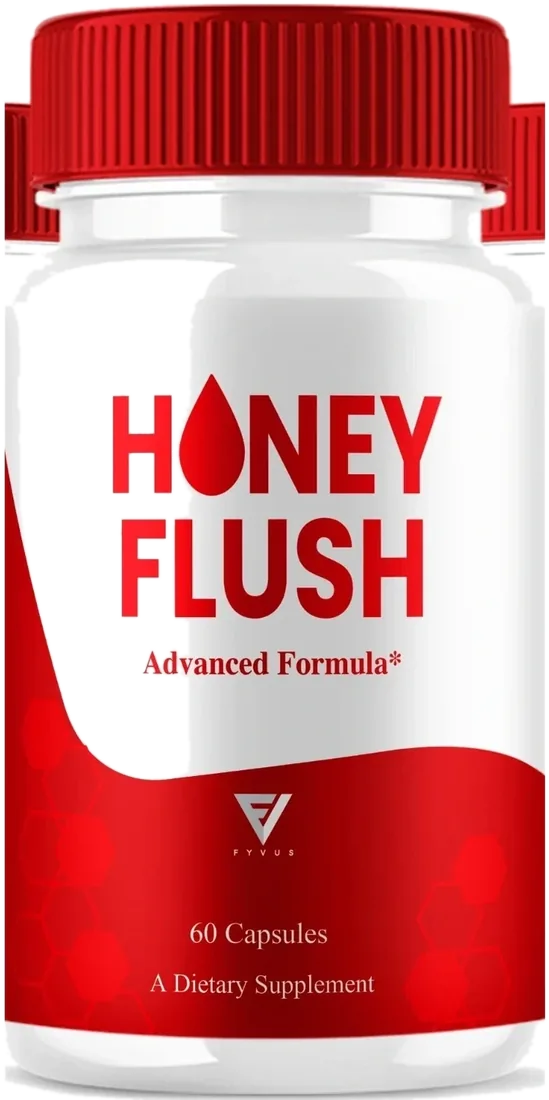
Label reading
Nutrient Amounts vs. Proprietary Blends: Reading the HoneyFlush Label
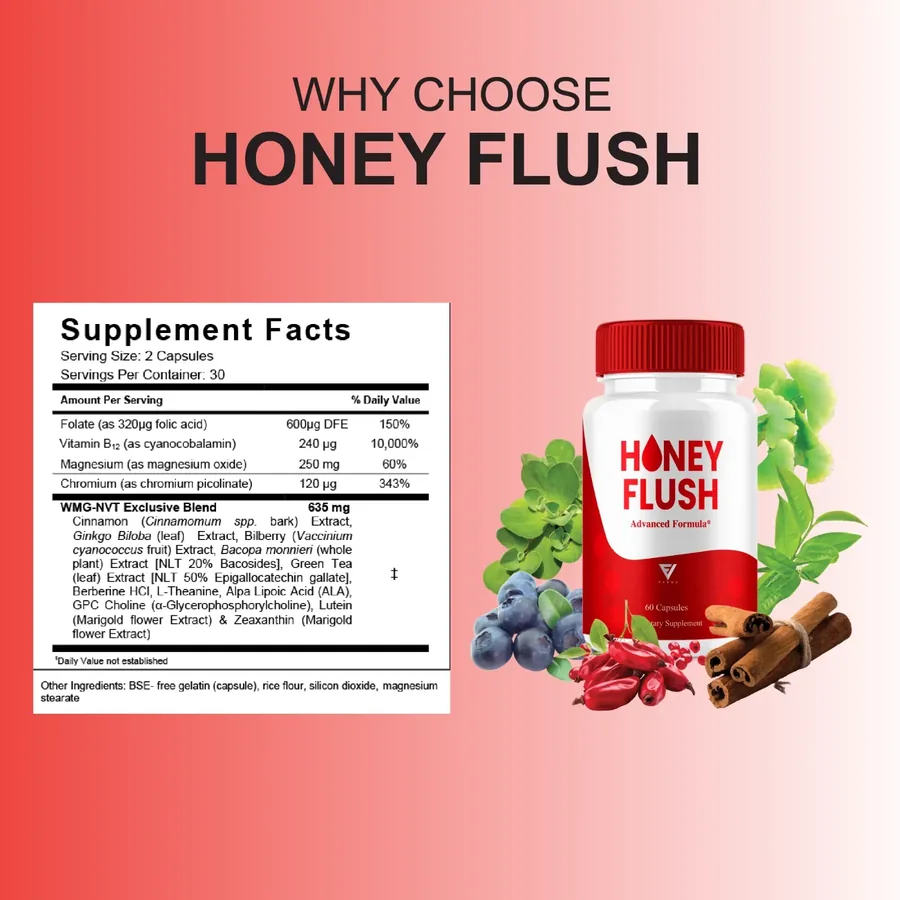
HoneyFlush prints exact amounts for four nutrients: folate 600 µg DFE, B12 240 µg, magnesium 250 mg and chromium 120 µg. Ten more ingredients share one 635 mg blend with no single amounts, listed from most to least by weight. You can check the nutrients against limits. The blend only tells you names and order.
What is the difference between a nutrient amount and a proprietary blend?
A nutrient amount tells you exactly how much of one ingredient is in a serving. A proprietary blend gives one total weight for a group of ingredients and keeps the split private.
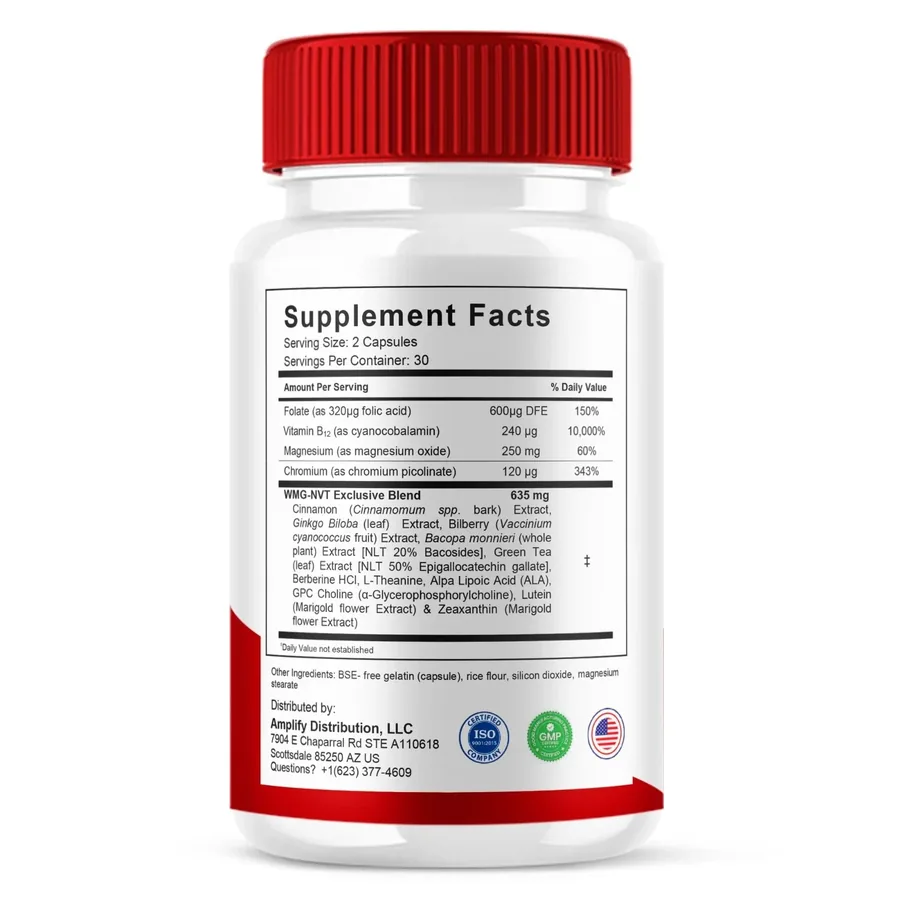
The HoneyFlush label has both. The top half lists four nutrients, each with its own amount and % Daily Value. The bottom half lists the "WMG-NVT Exclusive Blend," 635 mg of ten ingredients with no single amounts. Knowing which half you are reading changes what you can learn from it.
What do the four printed nutrient lines tell you?
They tell you the amount, the chemical form and how that amount compares with the Daily Value. For a buyer, that is the most useful information on any supplement label.
Here are the four lines as printed, per serving of 2 capsules:
- Folate as 320 µg folic acid: 600 µg DFE, 150% DV
- Vitamin B12 as cyanocobalamin: 240 µg, 10,000% DV
- Magnesium as magnesium oxide: 250 mg, 60% DV
- Chromium as chromium picolinate: 120 µg, 343% DV
With these numbers you can do real checks. You can add them to your multivitamin. You can compare them with upper limits. You can look up what the form means, such as magnesium oxide, which is known to loosen stools in some people (NIH ODS).
Why the form matters
The form after "as" tells you which compound supplies the nutrient. Folate here comes as 320 µg of folic acid, which counts as 600 µg DFE, because folic acid is absorbed better than folate from food (NIH ODS). Chromium comes as chromium picolinate, a common supplement form (NIH ODS). If you want the full story on the large B12 number, read what 10,000% Daily Value means.
What does the 635 mg blend line tell you?
It tells you the total weight, the names of the ten ingredients and their order by weight. It does not tell you how much of any one ingredient you get.
US labeling rules require a proprietary blend to list its ingredients from most to least by weight (FDA). So the order is a real clue. Cinnamon, listed first, is the largest share. Lutein and zeaxanthin, listed last, are the smallest.
Cinnamon bark extract
Listed first, so it weighs the most of the ten.
Ginkgo, bilberry, bacopa, green tea
The next four, in falling order by weight.
Berberine HCl, L-theanine, ALA
The middle and lower part of the list.
GPC choline, then lutein and zeaxanthin
Listed last, so they weigh the least.
What the order cannot tell you
The order gives a ranking, not a size. Cinnamon could be most of the 635 mg or only a modest share. Lutein could be a tiny fraction of it. Two labels with the same order could hold very different amounts. That is why the blend line cannot be checked the way the nutrient lines can.
The ‡ symbol means no Daily Value is set for these ingredients. That is normal for plant extracts and compounds like L-theanine. It is not a warning, just a note that there is no reference amount.
How do the two halves compare side by side?
The nutrient lines answer almost every buyer question. The blend line answers only "what is in it?" and "in what order?"
| Question | Nutrient lines (4) | WMG-NVT Exclusive Blend (10) |
|---|---|---|
| Amount per serving | Printed for each: 600 µg DFE, 240 µg, 250 mg, 120 µg | Only the total: 635 mg |
| % Daily Value | Printed: 150%, 10,000%, 60%, 343% | ‡ Daily Value not established |
| Chemical form | Named: folic acid, cyanocobalamin, magnesium oxide, chromium picolinate | Named for most, with some standardizations (20% bacosides, 50% EGCG) |
| Can you check upper limits? | Yes | Only for choline, and only roughly |
| Can you compare with a study dose? | Yes | No, only the order by weight |
| Can you compare with another brand? | Yes, line by line | Only by ingredient list |
This is not unique to HoneyFlush. Many supplements that mix vitamins with herbs use the same layout. The table simply shows what each half lets you do.
Why does the unprinted split matter for HoneyFlush?
It matters because several blend ingredients were studied at daily amounts larger than the whole blend. You cannot tell whether HoneyFlush comes close to any of them.
Berberine is usually studied at 500 to 1,500 mg a day (Berberine review, 2025). Alpha lipoic acid is often studied at 300 to 600 mg (LPI). L-theanine was tested at 200 mg in healthy adults (Hidese, 2019). Bacopa trials mostly used about 300 mg of extract (Kongkeaw, 2014). Berberine at its lowest study dose would take 500 of the 635 mg, leaving 135 mg for nine other ingredients.
Our review of the ten blend ingredients goes through what each study tested and in whom.
Does a proprietary blend mean the product is bad?
No. A blend is a legal way to list ingredients, and it may protect a recipe. It just means you are trusting the maker on amounts you cannot see.
Some buyers accept that trade. They want the four printed nutrients and see the plant blend as an extra. Others want exact doses of one herb and would rather buy a single-ingredient product with a printed amount. Neither view is wrong. The point is to know which half of the label you are paying for.
Questions to ask the seller
- Can you share the amount of each blend ingredient?
- Is there a certificate of analysis for my lot? (HoneyFlush reference HON-7240-26-HO; the document is not published.)
- Which ingredient makes up most of the 635 mg?
You can ask the order desk listed in the footer. If the answer is "not published," that is an answer too.
How should you use this when you read any label?
Read the printed amounts first and judge the product on those. Then read the blend as a list of names in weight order, not as a list of doses.
Find the nutrient lines
Note each amount and form. Add them to anything else you take.
Check the limits
Folic acid and supplemental magnesium have adult upper limits. HoneyFlush uses 320 µg of 1,000 µg and 250 mg of 350 mg.
Read the blend in order
The first name weighs the most. The last weighs the least.
Compare with study doses
If one study dose is near or above the blend total, that ingredient cannot be at a study dose alongside the others.
Check interactions
Blend ingredients can still matter. Berberine may lower metformin levels, and ginkgo may raise bleeding risk with blood thinners.
For the full label with each line explained, see the Supplement Facts page. For each ingredient on its own, see the ingredients page. If you take medicine, the side effects page lists known interactions.
Nutrient amounts and blends: common questions
What is a proprietary blend?
A group of ingredients listed under one total weight. The label names each ingredient in order by weight but does not print individual amounts.
Which HoneyFlush blend ingredient is largest?
Cinnamon bark extract, because it is listed first. The exact amount is not published.
Why is there a ‡ on the blend line?
It means no Daily Value has been set for those ingredients. That is normal for plant extracts.
Can I find out the blend amounts?
You can ask the order desk. The amounts are not published on the label or on this site.
Are the four nutrient amounts safe to add to a multivitamin?
Check your totals. Keep folic acid from all sources under 1,000 µg and supplemental magnesium under 350 mg a day.
Sources for this page
- NIH Office of Dietary Supplements. Folate: Fact Sheet for Health Professionals. Source
- NIH Office of Dietary Supplements. Magnesium: Fact Sheet for Health Professionals. Updated January 2026. Source
- NIH Office of Dietary Supplements. Chromium: Fact Sheet for Health Professionals. Source
- U.S. Food and Drug Administration. Dietary Supplements. Source
- Berberine and health outcomes: an overview of systematic reviews. 2025. Source
- Linus Pauling Institute, Oregon State University. Lipoic Acid. Source
- Hidese S, et al. Effects of L-theanine administration on stress-related symptoms and cognitive functions in healthy adults. Nutrients, 2019. Source
- Kongkeaw C, et al. Bacopa monnieri meta-analysis (J Ethnopharmacol, 2014). Source
Keep reading
Ready when you are
Order HoneyFlush from the authorized US retailer
60 capsules in every bottle, 2 a day. 60-day money-back guarantee. Tracking and refund help comes from the order desk listed in the footer.