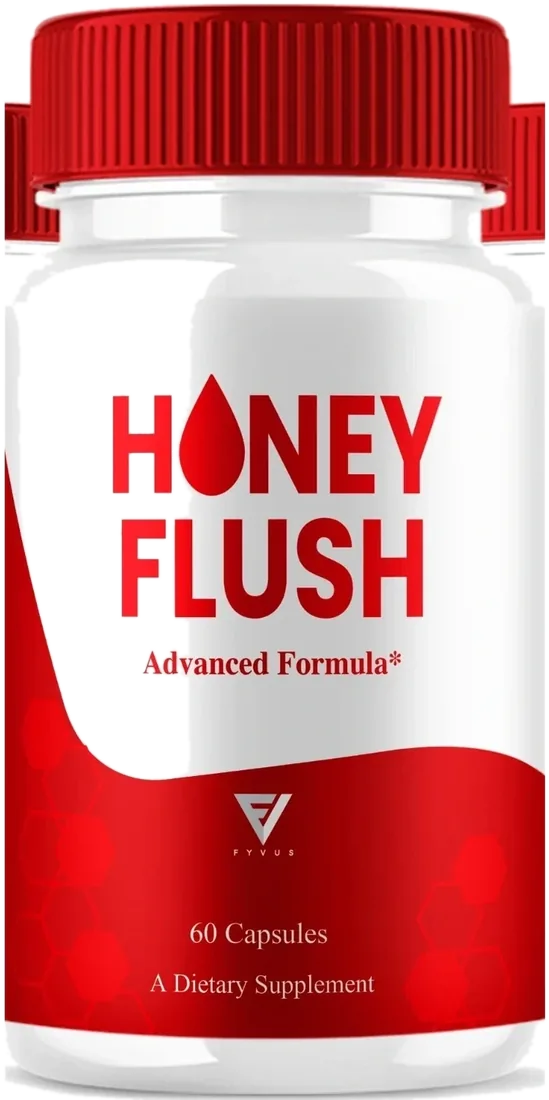
Read from the Supplement Facts panel
HoneyFlush Ingredients: 4 Nutrients and a 10-Ingredient Blend
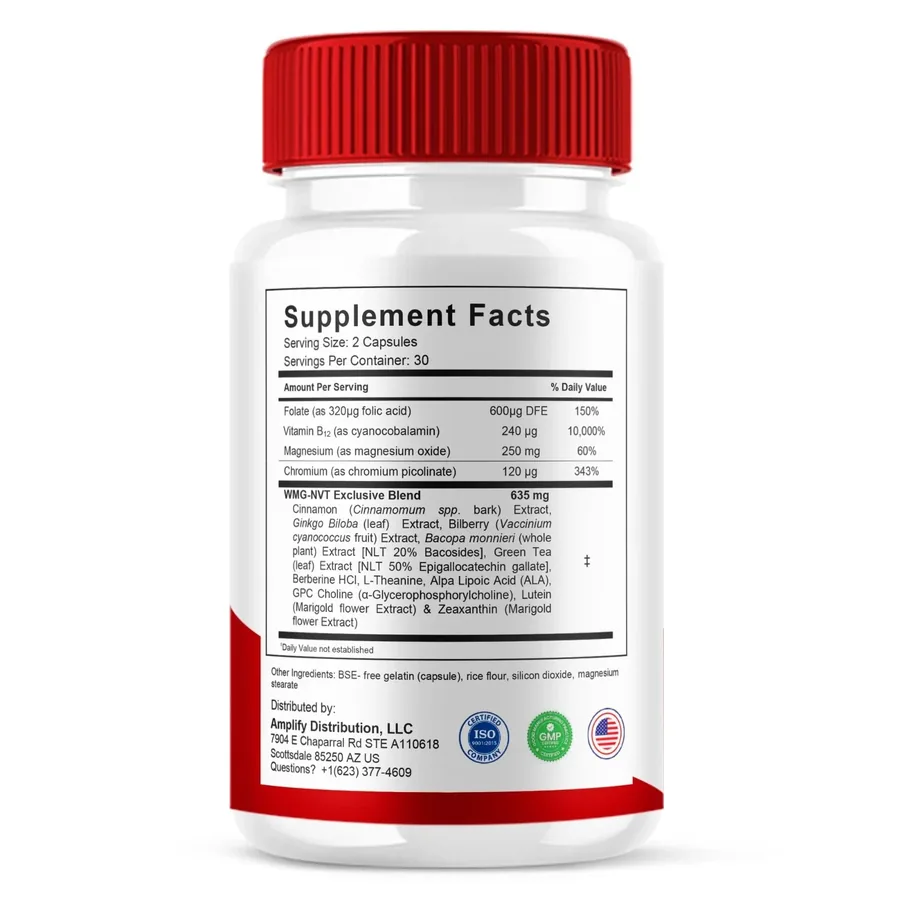
HoneyFlush has 14 active ingredients in 2 capsules. Four have printed amounts: folate 600 µg DFE, vitamin B12 240 µg, magnesium 250 mg and chromium 120 µg. Ten more, from cinnamon to lutein and zeaxanthin, share a 635 mg blend with no single amounts listed.
What is in HoneyFlush?
HoneyFlush has four nutrients with printed amounts and a 635 mg blend of ten more ingredients. That is 14 active items in a serving of 2 capsules. Each bottle holds 60 capsules, which is 30 servings.
The four nutrients are folate, vitamin B12, magnesium and chromium. The blend is called the "WMG-NVT Exclusive Blend." It lists cinnamon, ginkgo, bilberry, bacopa, green tea, berberine, L-theanine, alpha lipoic acid, GPC choline, and lutein with zeaxanthin.
The capsule shell and fillers are listed apart from the actives. You can see every line in order on the Supplement Facts page.
4 nutrients
Each one has an exact amount and a %DV on the panel.
10-ingredient blend
They share 635 mg. No single amount is printed.
2 capsules a serving
60 capsules make 30 servings, about one month.
How much of each nutrient does HoneyFlush contain?
A serving gives 600 µg DFE of folate, 240 µg of B12, 250 mg of magnesium and 120 µg of chromium. The table shows the form each one comes in and its share of the Daily Value.
| Nutrient | Form on the label | Amount per 2 capsules | % Daily Value |
|---|---|---|---|
| Folate | as 320 µg folic acid | 600 µg DFE | 150% |
| Vitamin B12 | as cyanocobalamin | 240 µg | 10,000% |
| Magnesium | as magnesium oxide | 250 mg | 60% |
| Chromium | as chromium picolinate | 120 µg | 343% |
Printed amounts are the most useful part of any label. You can add them to what you already eat or take and see the total.
Folate
The 600 µg DFE comes from 320 µg of folic acid. DFE stands for dietary folate equivalents, a unit that accounts for folic acid being absorbed better than food folate. The adult upper limit for folic acid from supplements is 1,000 µg a day, so one serving sits well under it (NIH ODS, folate).
Vitamin B12
240 µg is 10,000% of the Daily Value. That sounds huge. No upper limit has been set for B12, because the body absorbs only a small share of a large oral dose (NIH ODS, vitamin B12). The form is cyanocobalamin, the most common form in supplements.
Magnesium
250 mg is 60% of the Daily Value. The upper limit for magnesium from supplements is 350 mg a day for adults. Magnesium oxide is a form known to loosen stools in some people (NIH ODS, magnesium). If you take another product with magnesium, add the two together.
Chromium
120 µg is 343% of the Daily Value. It comes as chromium picolinate. No upper limit is set for chromium, and study results in people are mixed (NIH ODS, chromium).
What is in the 635 mg WMG-NVT Exclusive Blend?
The blend holds ten ingredients in 635 mg, with no amount printed for any of them. The label marks the blend with a ‡ sign, which means a Daily Value has not been set for these items.
US labeling rules say a blend must list its ingredients from most to least by weight. So cinnamon is the largest item and lutein with zeaxanthin is the smallest. Beyond that order, the real split is not public.
1. Cinnamon bark extract (Cinnamomum spp.)
Cinnamon is listed first, so it is the largest item in the blend by weight. NCCIH says studies have not shown that cinnamon helps any health condition (NCCIH, cinnamon).
2. Ginkgo biloba leaf extract
Ginkgo comes from the leaves of one of the oldest living tree species. NCCIH reports that ginkgo has not been shown to work for any condition it was studied for (NCCIH, 2025).
3. Bilberry fruit extract (Vaccinium cyanococcus)
Bilberry is a dark blue berry related to the blueberry. NCCIH says there is not enough evidence to show it helps eye health or other conditions (NCCIH, bilberry).
4. Bacopa monnieri extract (NLT 20% bacosides)
Bacopa is an herb from Ayurvedic practice. "NLT" means not less than, so at least 20% of the extract is bacosides. A review of trials, mostly using about 300 mg of extract a day for 12 weeks, found small effects on some memory tests (Kongkeaw et al., 2014).
5. Green tea leaf extract (NLT 50% EGCG)
This extract is at least half EGCG, the main catechin in green tea. NCCIH calls the research inconclusive for most uses (NCCIH, 2025).
6. Berberine HCl
Berberine is a bitter compound found in plants such as goldenseal. It has been studied for blood sugar and cholesterol, usually at 500 to 1,500 mg a day, and mostly in people with those health problems (overview of reviews, 2025). Those results do not carry over to healthy adults taking a small amount.
7. L-theanine
L-theanine is an amino acid found in tea leaves. One trial in healthy adults gave 200 mg a day for 4 weeks and looked at stress-related symptoms and thinking tests (Hidese et al., 2019).
8. Alpha lipoic acid (ALA)
The body makes small amounts of ALA on its own. The label spells it "Alpa Lipoic Acid," which is a typo. Supplement studies commonly used 300 to 600 mg a day or more (Linus Pauling Institute).
9. GPC choline (alpha-glycerophosphorylcholine)
This is one form of choline, a nutrient the body uses to build cell membranes and send nerve signals. The adult upper limit for total choline is 3,500 mg a day, far above anything a small blend could hold (NIH ODS, choline).
10. Lutein and zeaxanthin (marigold flower extract)
These two yellow pigments are found in the retina of the eye. The AREDS2 study used 10 mg lutein and 2 mg zeaxanthin a day in people who already had age-related eye disease (National Eye Institute). They are listed last, so they are the smallest part of the blend.
Can 635 mg hold research amounts of all ten?
No. Studied daily amounts for just a few of these ingredients add up to far more than 635 mg. The blend can only hold smaller amounts of most of them.
| Ingredient | Amount used in studies | Share of 635 mg |
|---|---|---|
| Berberine | 500 to 1,500 mg a day | 79% to over 200% |
| Alpha lipoic acid | 300 to 600 mg a day | 47% to 94% |
| Bacopa extract | About 300 mg a day | About 47% |
| L-theanine | 200 mg a day | About 31% |
| Lutein + zeaxanthin | 10 mg + 2 mg a day | About 2% |
Berberine is a good example. At 500 mg, the low end of study doses, it would take most of the blend. It is also listed sixth, after five other items that must weigh at least as much. So the berberine in a serving is likely well under study amounts.
For a longer look at this trade-off, read nutrient amounts versus proprietary blends.
What are the other ingredients in HoneyFlush?
The other ingredients are BSE-free gelatin (capsule), rice flour, silicon dioxide, magnesium stearate. These make the capsule and help the powder flow in the machines.
- BSE-free gelatin forms the capsule shell. Gelatin comes from animals, so HoneyFlush is not vegetarian or vegan.
- Rice flour is a common filler that adds bulk to the powder.
- Silicon dioxide keeps the powder from clumping.
- Magnesium stearate helps the powder move through the filling machine.
The name says "Honey," but the label lists no honey at all. Nothing on the panel comes from bees.
Which ingredients need a word with your clinician?
Berberine and ginkgo are the two that matter most for people on medicines. Berberine may lower metformin levels and change how the body handles many drugs (NCCIH, goldenseal). Ginkgo may raise bleeding risk with blood thinners such as warfarin.
Green tea extract has rare reports of liver injury, and chromium and berberine touch blood sugar. The label says not to use HoneyFlush if you are pregnant or nursing. Full details are on the side effects page.
To learn what each ingredient is studied for, see how HoneyFlush works.
HoneyFlush ingredients: common questions
Does HoneyFlush contain honey?
No. The label lists no honey. The name is a brand name, and none of the ingredients come from bees.
Which ingredient is the largest in the blend?
Cinnamon bark extract. It is listed first, and blends must list items from most to least by weight. Its exact amount is not printed.
Is 240 µg of B12 too much?
No upper limit has been set for vitamin B12. The body absorbs only a small share of large oral doses, according to the NIH Office of Dietary Supplements.
Is HoneyFlush vegetarian?
No. The capsule is made from BSE-free gelatin, which comes from animals.
Why does the label say Alpa Lipoic Acid?
It is a spelling error on the label. The ingredient is alpha lipoic acid, often shortened to ALA.
Can I see how much berberine is in each serving?
No. Berberine sits inside the 635 mg blend, and the label gives no single amount. It is listed sixth, so five items weigh at least as much.
Sources for this page
- NIH Office of Dietary Supplements. Folate: Fact Sheet for Health Professionals. Source
- NIH Office of Dietary Supplements. Vitamin B12: Fact Sheet for Health Professionals. Source
- NIH Office of Dietary Supplements. Magnesium: Fact Sheet for Health Professionals. Updated January 2026. Source
- NIH Office of Dietary Supplements. Chromium: Fact Sheet for Health Professionals. Source
- National Center for Complementary and Integrative Health. Cinnamon. Source
- National Center for Complementary and Integrative Health. Ginkgo. Updated February 2025. Source
- National Center for Complementary and Integrative Health. Bilberry. Source
- Kongkeaw C, et al. Meta-analysis of randomized controlled trials on cognitive effects of Bacopa monnieri extract. J Ethnopharmacol, 2014. Source
- National Center for Complementary and Integrative Health. Green Tea. Updated February 2025. Source
- Berberine and health outcomes: an overview of systematic reviews. 2025. Source
- Hidese S, et al. Effects of L-theanine administration on stress-related symptoms and cognitive functions in healthy adults. Nutrients, 2019. Source
- Linus Pauling Institute, Oregon State University. Lipoic Acid. Source
- NIH Office of Dietary Supplements. Choline: Fact Sheet for Health Professionals. Source
- National Eye Institute. AREDS/AREDS2 Clinical Trials. Source
- National Center for Complementary and Integrative Health. Goldenseal (berberine). Updated February 2025. Source
Keep reading
Ready when you are
Order HoneyFlush from the authorized US retailer
60 capsules in every bottle, 2 a day. 60-day money-back guarantee. A real person at +1 (302) 200-3480 for orders, tracking and refunds.