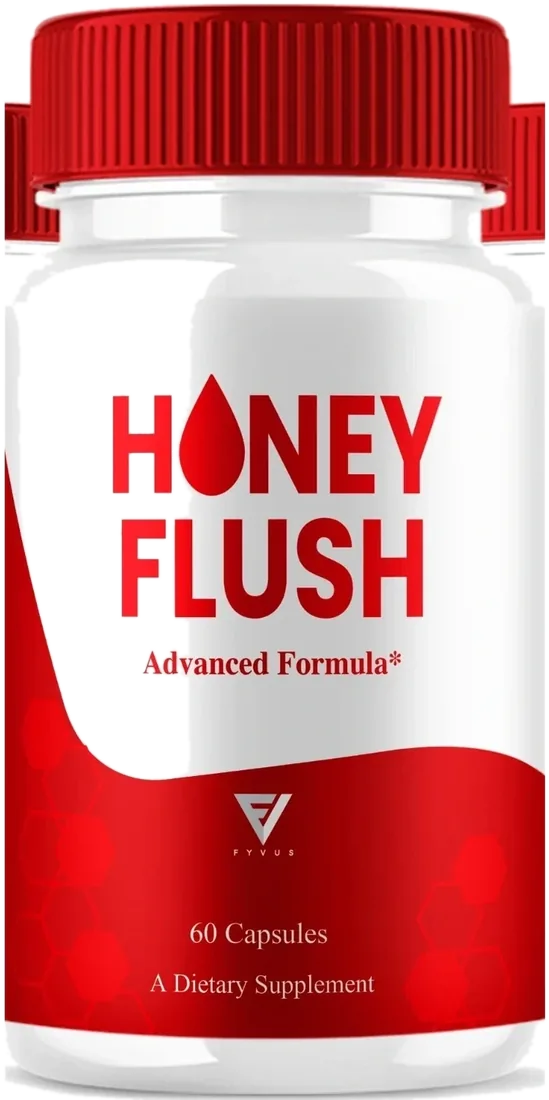
A guide for adults comparing daily supplements
All-in-One Wellness Supplements: A Plain Guide With HoneyFlush as the Example
An all-in-one supplement mixes nutrients and plant extracts in one serving. HoneyFlush has four nutrients with printed amounts (folate, B12, magnesium, chromium) and ten ingredients sharing a 635 mg blend. Food comes first. If you also take a multivitamin, add up folic acid (limit 1,000 µg) and supplemental magnesium (limit 350 mg).
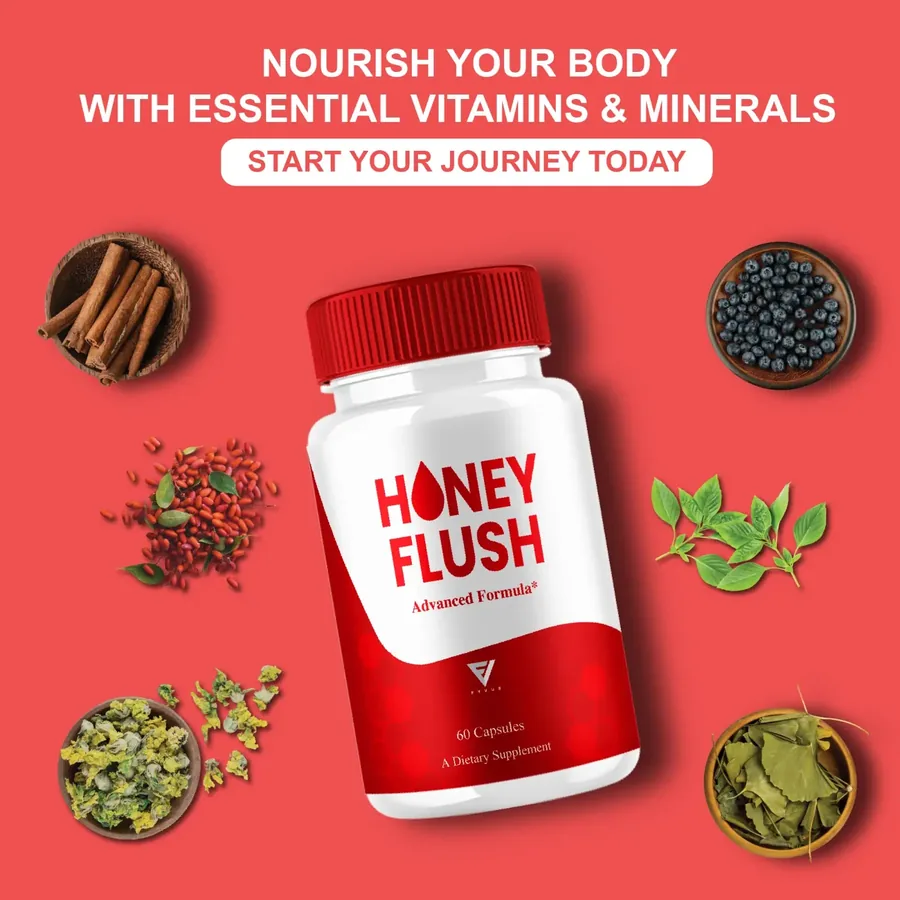
What does "all-in-one" mean on a supplement label?
"All-in-one" is a marketing phrase, not a defined term. It usually means a product mixes vitamins or minerals with herbs or other compounds in one daily serving.
No rule says which nutrients or how much of each an all-in-one product must hold. One brand may use the phrase for 25 vitamins and minerals. Another may use it for four nutrients plus a plant blend. HoneyFlush uses the headline "All-in-one supplement" and "One supplement, multiple benefits." Its label lists four nutrients with amounts and ten more ingredients in one 635 mg blend.
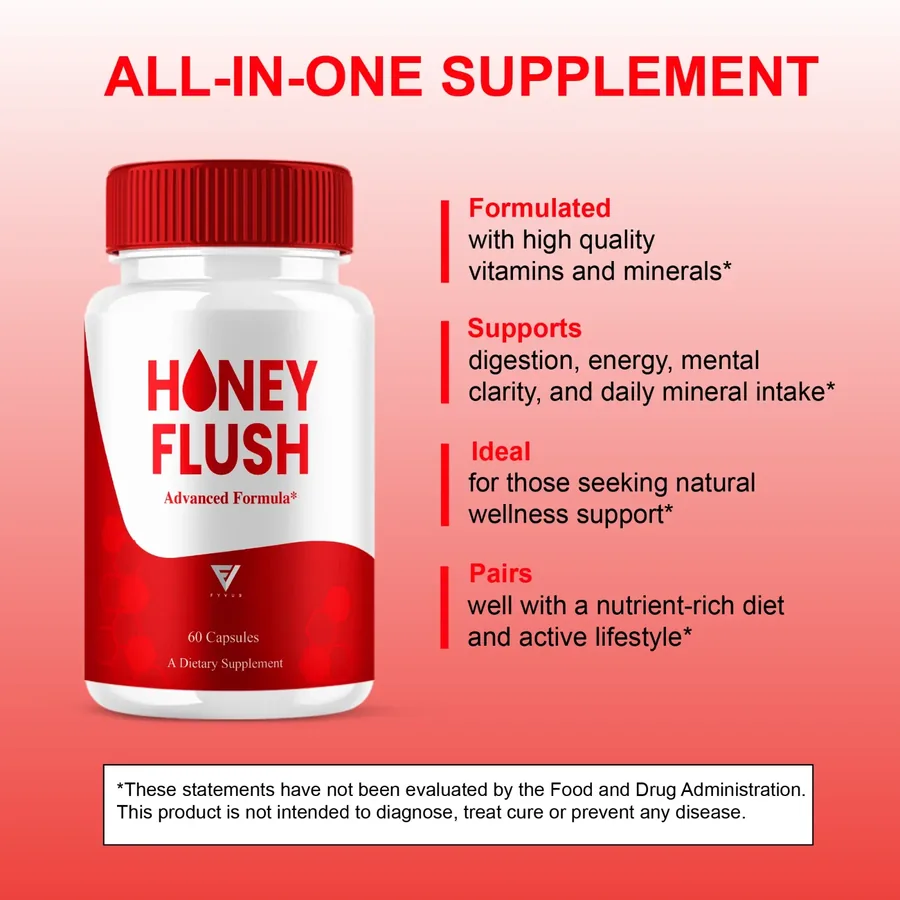
So the useful question is not "is it all-in-one?" It is "what is in it, how much, and do I already get that elsewhere?"
Why start with food before any supplement?
Food comes first because it supplies nutrients along with fiber, protein and many other compounds that a capsule does not. Federal health guidance says supplements can help fill gaps but cannot replace a varied diet (NIH ODS).
The HoneyFlush panel says the same thing in its own words: "Pairs well with a nutrient-rich diet and active lifestyle*." Here is where the four printed nutrients show up in ordinary food.
Folate
Leafy greens, beans, peas and fortified grains. Folic acid is the form added to foods and pills.
Vitamin B12
Meat, fish, eggs, milk and fortified cereals. People who eat no animal foods often need a fortified source.
Magnesium
Nuts, seeds, beans, whole grains and leafy greens.
Chromium
Small amounts in meat, whole grains, some fruits and vegetables.
If you eat a mix of these foods most days, you may already meet the Daily Value for some of them. That changes how much a supplement adds.
How are nutrients different from botanicals?
Nutrients are things your body needs to get from food, and they have Daily Values. Botanicals are plant extracts studied for possible effects, and they have no Daily Value at all.
Nutrients
- Vitamins and minerals your body needs from food.
- Have a Daily Value, so the label prints a %DV.
- Many have an upper limit set by health experts.
- In HoneyFlush: folate, B12, magnesium, chromium.
Botanicals and other compounds
- Plant extracts and compounds that are not essential nutrients.
- No Daily Value, so the label shows a ‡ symbol.
- Research doses come from studies, not from diet needs.
- In HoneyFlush: ten items inside a 635 mg blend.
This split matters on HoneyFlush. The four nutrients have exact amounts, so you can check them against limits. The ten blend items share 635 mg with no single amounts. Studied doses for some of them are large. Berberine is usually studied at 500 to 1,500 mg a day, L-theanine at 200 mg and alpha lipoic acid at 300 to 600 mg (Berberine review, 2025; Hidese, 2019; LPI). All ten at research doses cannot fit in 635 mg.
Some of the plants also have weak evidence. NCCIH says studies have not shown that cinnamon or ginkgo helps any health condition (NCCIH; NCCIH).
What are upper limits and why do they matter?
An upper limit is the highest daily amount that is unlikely to cause harm for most adults. It is not a target, and more is not better.
Health experts set upper limits for some nutrients but not others. When no limit is set, it usually means no harm has been seen at studied intakes, not that any amount is useful. The table below compares one HoneyFlush serving with the adult limits from the NIH Office of Dietary Supplements (folate; magnesium; B12; chromium; choline).
| Nutrient | HoneyFlush per 2 capsules | Adult upper limit (supplements) | Room left for other products |
|---|---|---|---|
| Folic acid | 320 µg (600 µg DFE, 150% DV) | 1,000 µg from supplements and fortified foods | About 680 µg |
| Vitamin B12 | 240 µg (10,000% DV) | None set | No limit set, but more adds little |
| Magnesium | 250 mg (60% DV) | 350 mg from supplements | 100 mg |
| Chromium | 120 µg (343% DV) | None set | No limit set |
| Choline (GPC) | Not published, inside 635 mg blend | 3,500 mg total | Large margin |
Reading the table
On its own, a HoneyFlush serving stays under each limit that exists. The tight spots are folic acid and magnesium, because those limits count what you take from every pill and fortified food. B12 at 10,000% DV looks huge, but no limit is set and the body absorbs only a small share of a large dose. The Supplement Facts page walks through each line.
What happens if you stack HoneyFlush with a multivitamin?
Stacking means taking two or more products that share ingredients. With HoneyFlush and a multivitamin, the overlap is usually folic acid, magnesium, B12 and chromium.
The math is simple. HoneyFlush gives 320 µg of folic acid, so your other products and fortified foods have about 680 µg of room before the 1,000 µg limit. HoneyFlush gives 250 mg of magnesium, so only 100 mg of supplemental magnesium fits before the 350 mg limit. Many multivitamins and "calm" or sleep products contain magnesium, so check each label.
You do not need to guess. Use the four steps below.
List what you already take
Write down every supplement and fortified drink, with the amounts from each label.
Add the numbers
Add HoneyFlush's folic acid and magnesium to your list. Check the totals against the upper limits in the table above.
Check your medicines
Bring the list and the HoneyFlush label to a pharmacist, and ask about berberine, ginkgo and green tea extract.
Decide on one plan
If the totals are high, drop one product rather than taking both. Two capsules a day is the plain label dose.
Where does HoneyFlush fit in a daily routine?
HoneyFlush fits as a two-capsule daily product for adults who want a few printed nutrients plus a mixed plant blend in one bottle. One bottle holds 60 capsules, which is 30 days at 2 a day.
The label directions read: "Take 2 capsules daily (or as needed) or as directed by your health care provider." The words "as needed" are vague, so we suggest the plain 2 capsules daily. Take them with a meal and water. The how to use page covers timing.
Who should skip it or ask first
The label says not to use it if you are pregnant or nursing. It is for adults 18 and over. Berberine in the blend may lower metformin levels and affect how the body handles many medicines, and ginkgo may raise bleeding risk with blood thinners such as warfarin (NCCIH). If you take any prescription medicine, ask first. The side effects page lists every known interaction.
What it does not do
The label lists no honey, and the word "flush" is branding. We do not claim HoneyFlush detoxes or cleanses anything, and it is not a replacement for meals. If you already take a full multivitamin, HoneyFlush may add more overlap than value. Our 9-point checklist helps you compare it with other products.
All-in-one supplements: common questions
Is an all-in-one supplement the same as a multivitamin?
Not always. A multivitamin usually covers many vitamins and minerals. HoneyFlush covers four nutrients and adds a plant blend, so it is narrower on nutrients and wider on botanicals.
Can I take HoneyFlush with my multivitamin?
Check the totals first. Folic acid from all supplements and fortified foods should stay under 1,000 µg, and supplemental magnesium under 350 mg a day. HoneyFlush uses 320 µg and 250 mg of those.
Is 10,000% of the Daily Value of B12 too much?
No upper limit is set for B12, and the body absorbs only a small share of large doses. It is a very large number, but not one that crosses a limit.
Does HoneyFlush replace a healthy diet?
No. The brand's own panel says it pairs with a nutrient-rich diet. A capsule cannot supply the fiber and protein that food does.
How long does one bottle last?
One bottle holds 60 capsules. At 2 capsules a day, that is 30 days.
Sources for this page
- NIH Office of Dietary Supplements. Dietary Supplements: What You Need to Know. Source
- NIH Office of Dietary Supplements. Folate: Fact Sheet for Health Professionals. Source
- NIH Office of Dietary Supplements. Vitamin B12: Fact Sheet for Health Professionals. Source
- NIH Office of Dietary Supplements. Magnesium: Fact Sheet for Health Professionals. Updated January 2026. Source
- NIH Office of Dietary Supplements. Chromium: Fact Sheet for Health Professionals. Source
- NIH Office of Dietary Supplements. Choline: Fact Sheet for Health Professionals. Source
- National Center for Complementary and Integrative Health. Cinnamon. Source
- National Center for Complementary and Integrative Health. Ginkgo. Updated February 2025. Source
- National Center for Complementary and Integrative Health. Goldenseal (berberine). Updated February 2025. Source
- Berberine and health outcomes: an overview of systematic reviews. 2025. Source
- Hidese S, et al. Effects of L-theanine administration on stress-related symptoms and cognitive functions in healthy adults. Nutrients, 2019. Source
- Linus Pauling Institute, Oregon State University. Lipoic Acid. Source
Keep reading
Ready when you are
Order HoneyFlush from the authorized US retailer
60 capsules in every bottle, 2 a day. 60-day money-back guarantee. A real person at +1 (302) 200-3480 for orders, tracking and refunds.