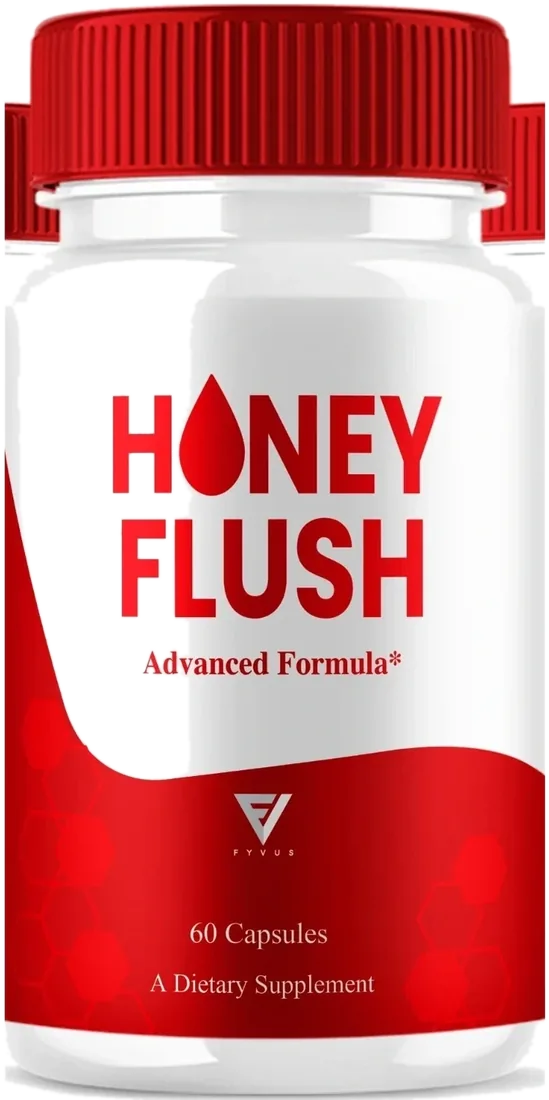
Research review
HoneyFlush's 10 Blend Ingredients: What the Research Tested
The HoneyFlush blend packs ten ingredients into 635 mg. Studies used berberine at 500 to 1,500 mg, ALA at 300 to 600 mg, bacopa at about 300 mg and L-theanine at 200 mg, so research doses of all ten cannot fit. NCCIH says cinnamon and ginkgo have not been shown to help any condition studied.
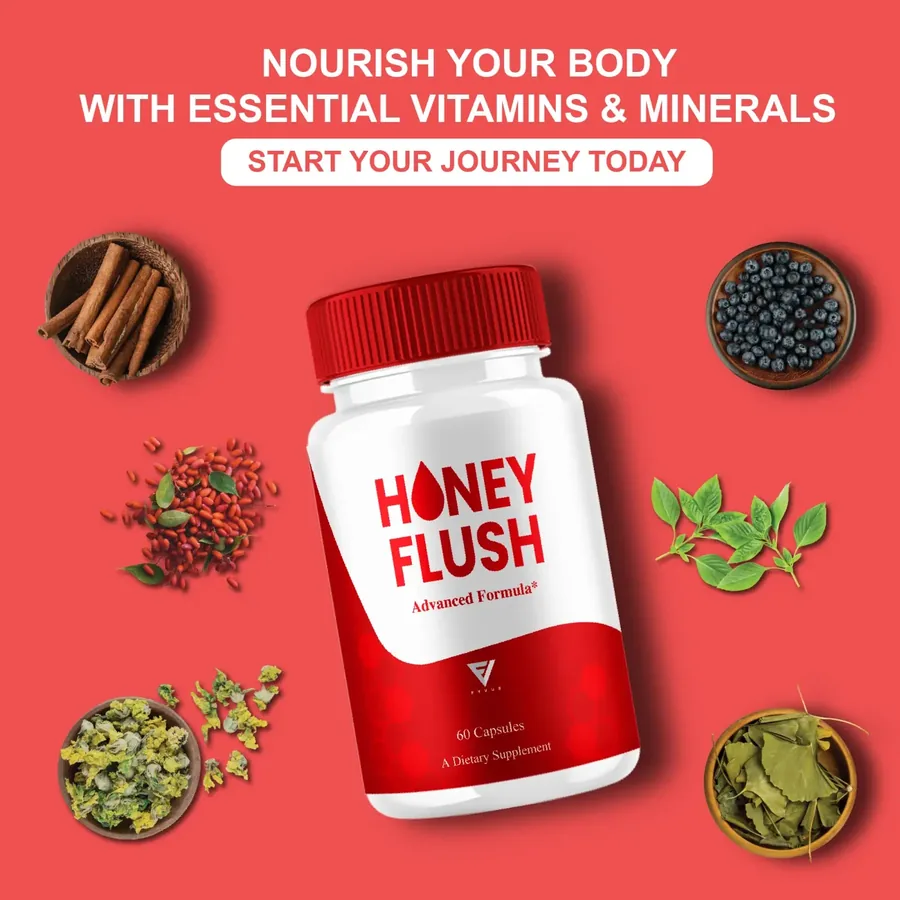
What is in the HoneyFlush blend?
The HoneyFlush "WMG-NVT Exclusive Blend" holds ten ingredients in 635 mg per 2-capsule serving. The label names them in order by weight but prints no single amounts.
In label order, they are cinnamon bark extract, ginkgo leaf extract, bilberry fruit extract, bacopa extract, green tea leaf extract, berberine HCl, L-theanine, alpha lipoic acid, GPC choline, and lutein with zeaxanthin. The label spells ALA as "Alpa Lipoic Acid," a typo for alpha. For how blends differ from printed nutrient amounts, read nutrient amounts vs. proprietary blends.
How did we review the research?
We asked three questions of each source. Then we compared the answer with what fits in the HoneyFlush blend.
Dose
What daily amount did the study use? We compare it with the 635 mg total for all ten.
People
Who took part? Results in patients do not carry over to healthy adults.
Form
Was it the same extract or compound? A standardized extract is not the same as a plain powder.
We used NIH and NCCIH fact sheets, a 2025 overview of berberine reviews and the named trials. We did not use brand claims as evidence. Panel lines such as "Designed to support mental clarity and focus" are the brand's words, and the FDA has not evaluated them.
The ten ingredients at a glance
Most studied doses are large compared with the 635 mg blend. Four ingredients have weak evidence from NCCIH, and several were studied mainly in people with a health condition.
| Blend ingredient (label order) | Amount used in research | Who was studied / what the source says | Fits in 635 mg with nine others? |
|---|---|---|---|
| 1. Cinnamon bark extract | Not summarized by NCCIH as one dose | NCCIH: not shown to help any health condition | Unknown |
| 2. Ginkgo leaf extract | Not summarized here | NCCIH: not shown to work for any condition studied | Unknown |
| 3. Bilberry fruit extract | Not summarized here | NCCIH: not enough evidence for eye or other conditions | Unknown |
| 4. Bacopa extract (20% bacosides) | About 300 mg a day, 12 weeks | Meta-analysis of trials; small effects on some memory tests | Unlikely with the rest |
| 5. Green tea extract (50% EGCG) | Not summarized here | NCCIH: inconclusive for most uses; rare liver injury reports | Unknown |
| 6. Berberine HCl | 500 to 1,500 mg a day | Mostly people with metabolic conditions | No |
| 7. L-theanine | 200 mg a day, 4 weeks | Healthy adults, stress and thinking tests | Unlikely with the rest |
| 8. Alpha lipoic acid | 300 to 600 mg a day or more | Supplement studies summarized by LPI | No |
| 9. GPC choline | Upper limit 3,500 mg for choline | Nutrient with a set upper limit | Far below the limit |
| 10. Lutein and zeaxanthin | 10 mg and 2 mg a day | AREDS2: people with age-related eye disease | Unknown, listed last |
"Not summarized here" means our sources do not give one standard daily amount. We leave the cell open rather than guess.
Cinnamon, ginkgo and bilberry: what did research find?
These three sit at the top of the blend, so they likely weigh the most. They also have the weakest evidence of the ten.
Cinnamon bark extract
Cinnamon is listed first, making it the largest share of the blend. NCCIH says studies have not shown that cinnamon helps any health condition (NCCIH). Cinnamon has been studied in blood sugar research, but that work does not support any claim for healthy adults.
Ginkgo leaf extract
NCCIH says ginkgo has not been shown to work for any condition studied (NCCIH, 2025). Ginkgo may raise bleeding risk, especially with blood thinners such as warfarin, and people are told to stop it before surgery.
Bilberry fruit extract
Bilberry is a dark berry related to the blueberry. NCCIH says there is not enough evidence to show it helps eye or other conditions (NCCIH).
Bacopa, green tea and berberine: what was tested?
These three have more research than the first group, but the study doses are large. Berberine's lowest study dose alone is most of the blend.
Bacopa monnieri extract
A meta-analysis of trials found small effects on some memory tests. Most trials used about 300 mg of extract a day for 12 weeks (Kongkeaw et al., 2014). HoneyFlush's bacopa is standardized to at least 20% bacosides, but the amount is not published.
Green tea leaf extract
NCCIH calls the research inconclusive for most uses (NCCIH, 2025). The HoneyFlush extract is at least 50% EGCG. Liver injury has been reported with green tea extracts in pills, though it is uncommon. Green tea may also lower levels of nadolol, atorvastatin and raloxifene.
Berberine HCl
Berberine was mainly studied for blood sugar and cholesterol in people with metabolic conditions, usually at 500 to 1,500 mg a day (Berberine overview, 2025). Those patient results do not transfer to healthy adults, and we make no such claim for HoneyFlush. Berberine may lower metformin levels and affect how the body handles many medicines. It is not for pregnancy or breastfeeding (NCCIH).
L-theanine, ALA, GPC choline, lutein and zeaxanthin: what do we know?
These four entries sit at the bottom of the blend, so they likely weigh the least. Their study doses range from a few milligrams to several hundred.
L-theanine
L-theanine is an amino acid found in tea. A trial in healthy adults gave 200 mg a day for 4 weeks and looked at stress-related symptoms and thinking tests (Hidese et al., 2019). Listed seventh, HoneyFlush's share is unknown.
Alpha lipoic acid
The body makes small amounts of ALA. Supplement studies commonly used 300 to 600 mg a day or more (Linus Pauling Institute). At 300 mg, ALA alone would be almost half the blend.
GPC choline
Choline is a nutrient used for cell membranes and signaling. The adult upper limit is 3,500 mg a day (NIH ODS). Whatever share of 635 mg HoneyFlush uses, it sits far below that limit.
Lutein and zeaxanthin
These two yellow pigments come from marigold flower extract. The AREDS2 study gave 10 mg lutein and 2 mg zeaxanthin a day to people with age-related eye disease (NEI). Those people had a diagnosed condition, so the results do not apply to healthy adults. Listed last, they are the smallest share.
Can 635 mg hold research doses of all ten?
No. Adding just the lowest study doses for berberine (500 mg), ALA (300 mg), bacopa (about 300 mg) and L-theanine (200 mg) gives 1,300 mg. That is about twice the whole blend, before counting the other six.
That does not make the four printed nutrients less useful. Folate, B12, magnesium and chromium have exact amounts you can check. The B12 figure is the biggest on the label, and we explain it in what 10,000% Daily Value means.
Where to read more
Each ingredient has its own card on the ingredients page. The side effects page lists every known interaction in one place. The how it works page explains what the label does and does not claim.
HoneyFlush blend research: common questions
Which blend ingredient has the most research?
Berberine and bacopa have the most trial data of the ten. Berberine was studied mostly in people with metabolic conditions, and bacopa at about 300 mg a day.
Does HoneyFlush contain enough berberine to match studies?
It cannot be known, because the amount is not published. The lowest study dose, 500 mg, would take most of the 635 mg blend.
Why is cinnamon listed first?
US labeling rules list blend ingredients from most to least by weight. Cinnamon bark extract is first, so it is the largest share, though the amount is not published.
Why do eye study results not apply here?
AREDS2 studied people with age-related eye disease, using 10 mg lutein and 2 mg zeaxanthin. HoneyFlush lists these last in its blend, with no amount.
Does the blend contain honey?
No. None of the ten blend ingredients is honey, and the label lists no honey anywhere.
Sources for this page
- National Center for Complementary and Integrative Health. Cinnamon. Source
- National Center for Complementary and Integrative Health. Ginkgo. Updated February 2025. Source
- National Center for Complementary and Integrative Health. Bilberry. Source
- Kongkeaw C, et al. Bacopa monnieri meta-analysis (J Ethnopharmacol, 2014). Source
- National Center for Complementary and Integrative Health. Green Tea. Updated February 2025. Source
- Berberine and health outcomes: an overview of systematic reviews. 2025. Source
- National Center for Complementary and Integrative Health. Goldenseal (berberine). Updated February 2025. Source
- Hidese S, et al. Effects of L-theanine administration on stress-related symptoms and cognitive functions in healthy adults. Nutrients, 2019. Source
- Linus Pauling Institute, Oregon State University. Lipoic Acid. Source
- NIH Office of Dietary Supplements. Choline: Fact Sheet for Health Professionals. Source
- National Eye Institute. AREDS/AREDS2 Clinical Trials. Source
Keep reading
Ready when you are
Order HoneyFlush from the authorized US retailer
60 capsules in every bottle, 2 a day. 60-day money-back guarantee. Tracking and refund help comes from the order desk listed in the footer.